
Robot vacuums: why last year's model in September is the best decision
In hardly any category do prices fall as fast as with robot vacuums — and in hardly any is the gap between two generations as small. Here, timing beats specification.
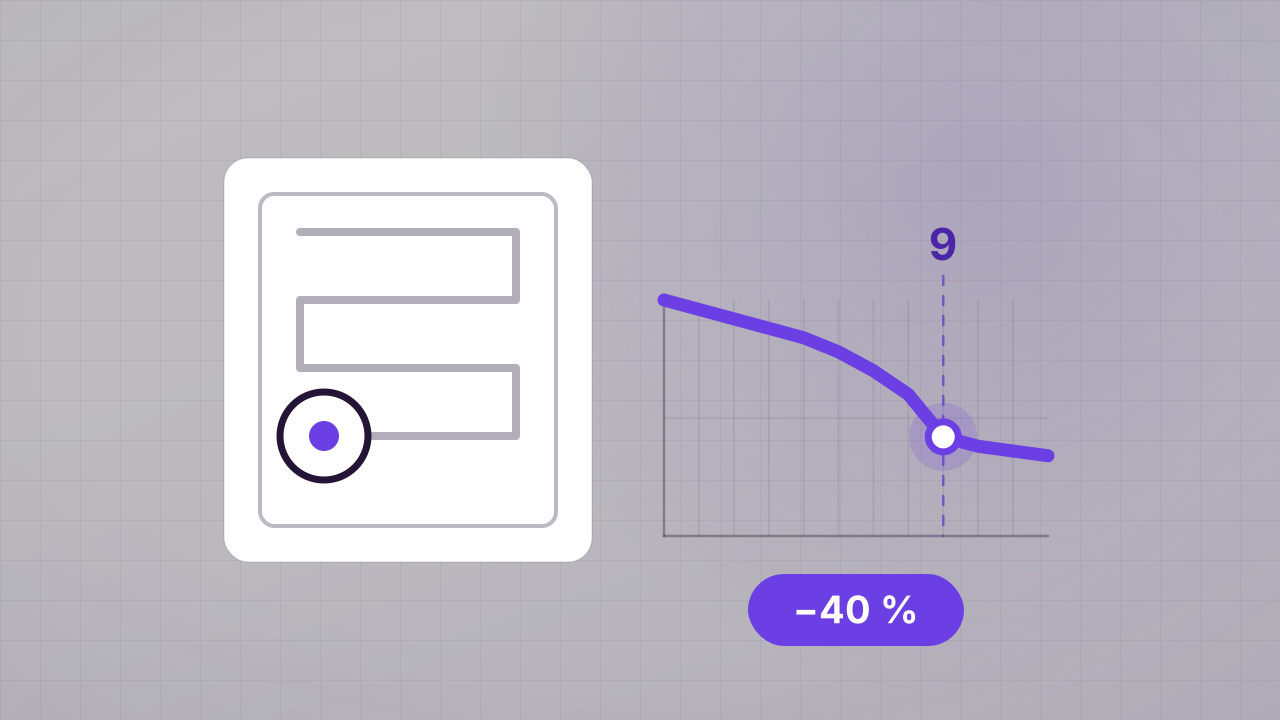
Robot vacuums are the category with the steepest price decline in the whole household range. A model launched as a flagship in spring regularly costs half as much by winter — with virtually unchanged day-to-day performance. Optimise here for specification rather than timing and you are paying the difference for features you rarely use.
The rhythm: one trade fair, one price collapse
The metronome of this category is the trade fair calendar. The big manufacturers present their new generations in late summer — the IFA in Berlin runs from 4 to 8 September 2026 and is the date at which the industry shows what will be on the shelves for Christmas.
For buyers the date is doubly interesting, but not for the obvious reason. The new arrivals are rarely the story. The story is what happens afterwards to the previous models: double-digit price falls within a few weeks are the norm here, not the exception.
That makes September and October the strongest buying window of the year — ahead of Black Week, by which point the selection has already thinned considerably.
Why the successor is rarely worth the premium
Between two generations remarkably little changes in what actually shapes everyday use. The marketing differences usually concern suction power in pascals, the name of the navigation system, and extra functions in the dock.
Only four things are practically relevant:
- Navigation. Whether the robot drives systematically in lanes and builds a usable map. Mid-range devices have done this reliably for several generations.
- Body height. Whether it fits under the sofa and the bed. No test report emphasises this, and it decides more about satisfaction than any suction figure.
- The mopping solution. A damp cloth dragged along is something quite different from a rotating roller that lifts over carpets. This is the only area where newer generations have made a genuine leap.
- The dock. Self-emptying saves noticeable effort. Everything beyond that — hot water cleaning, drying, automatic detergent dosing — is comfort, not cleaning result.
If last year's model is enough for you on those four points, there is practically no reason to pay the premium for the new generation. Very often it is the same device under a different name.
The running costs that do not appear in the offer
For large household appliances we have shown that the electricity bill can beat the discount. With robot vacuums the electricity is negligible — the running costs sit elsewhere, and they are substantial.
Wearing parts arrive here on schedule: side brushes, main brush, filters, mopping cloths or rollers, and depending on the device also dust bags for the dock. Over several years of use that adds up to a meaningful share of the purchase price — and the prices for them differ enormously between manufacturers.
Two questions are therefore worth asking before buying: what does a set of wearing parts for this model cost? And will it still be available when the device is three years old? For a very cheap discontinued model from a small brand, the second question is the more important one. For regularly recurring consumables, a subscription discount is otherwise worth a look.
The second point concerns docks with bags: convenient, but bag consumption is a permanent line item. Models with bagless emptying save here at the cost of a few more manual steps.
The special case of pet hair and carpet
One qualification that relativises the timing advice: if you have pets or mostly carpeted floors, you are shopping in a different category. Long hair wraps around classic bristle brushes and has to be cut out regularly — only rubber rollers or brushes with anti-tangle construction help against that, and those have only become widely available in newer generations.
The capacity question shifts too: a small dust bin is fine on hard floors, but with pet hair it is full after one run. Here the self-emptying dock is not a comfort feature but the precondition for the device running unattended at all. That is the one constellation in which paying the premium for the current generation can add up.
The buying rule in three sentences
Buy in September or October, not in November. Buy the previous year's generation, not the current one. And check body height, mopping solution and the price of wearing parts before you click — in that order, because they decide satisfaction considerably more than any figure in the spec sheet.
What the market is currently offering
The distribution of discounts in your marketplace's current household appliance feed — as a yardstick for when an individual offer in this category is actually notable:
15 %
Median discount across all running offers
7 %
of offers reach 40% or more
100
discounted offers analysed
Live sample of 100 current Home Appliances offers from your Amazon marketplace. The distribution shifts by the hour — which is why the ranking matters, not the individual percentage.
And the most heavily reduced devices in that same category:
Home Appliances: what is currently above 40%
Picked from your marketplace's running feed: the deepest discounts with a credible rating behind them. Still check the price history before you buy.

* Prices incl. VAT, plus shipping if applicable. Prices may have changed since the last update; the current price on the merchant’s site applies. Real-time updates are not technically possible.
About the author
Yahya Bolat
Redaktion · hyped4you
You might also like
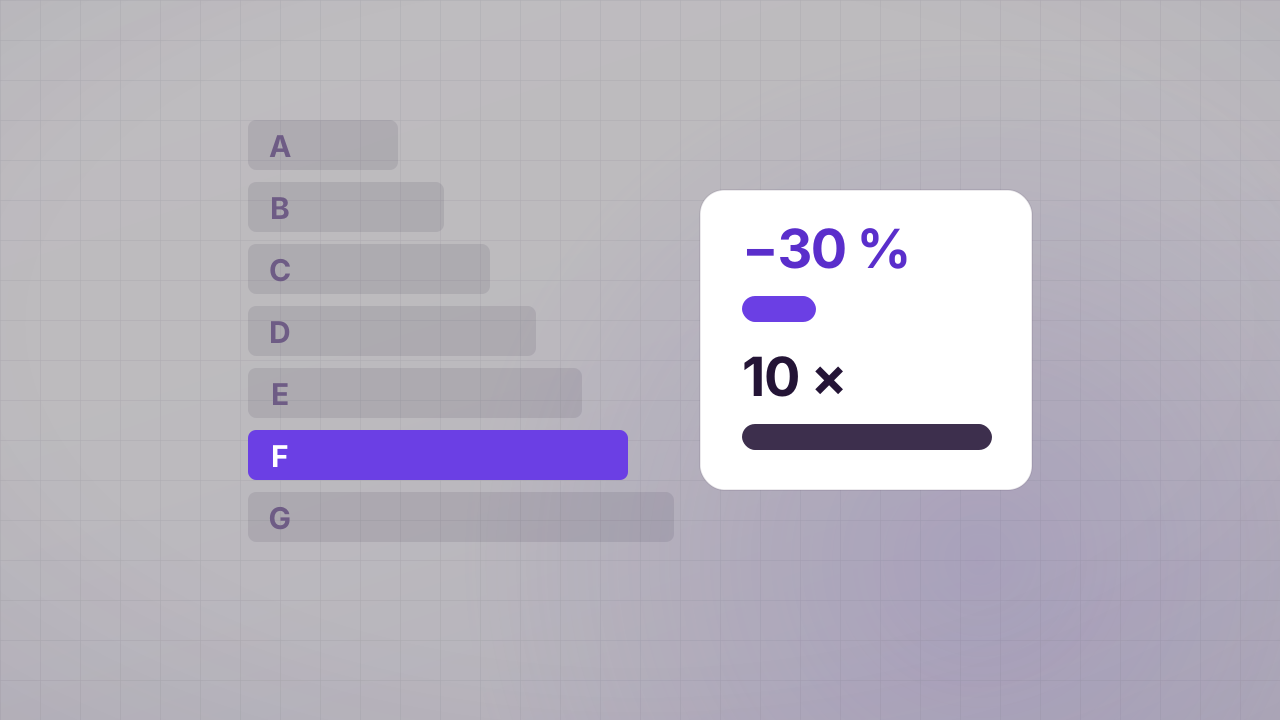
Discount or running costs: why −30 % on an appliance can cost more than −10 %
With washing machines, fridges and dryers the price is not decided by the percentage on the label but by ten years of electricity bills. Here is how to add both up.
Reading price history: how to tell whether that low price really is one
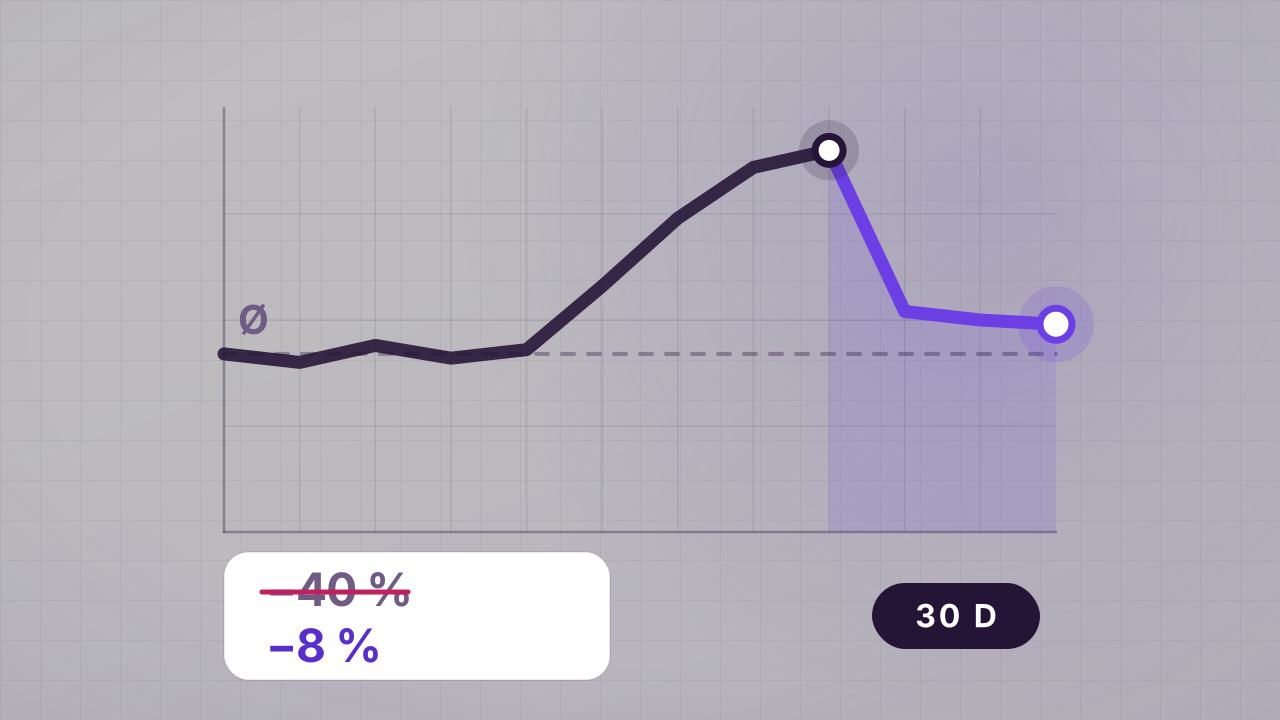
A single price tells you nothing. Only the curve behind it reveals whether you are looking at a genuine low or the end of an artificial rise. Four curve shapes and how to read them.