
Subscribe and save on consumables: when it pays off and when it becomes a trap
Up to 15 per cent permanently on things that run out anyway — the subscription discount is the most underrated saving route. But only as long as you keep an eye on the price.
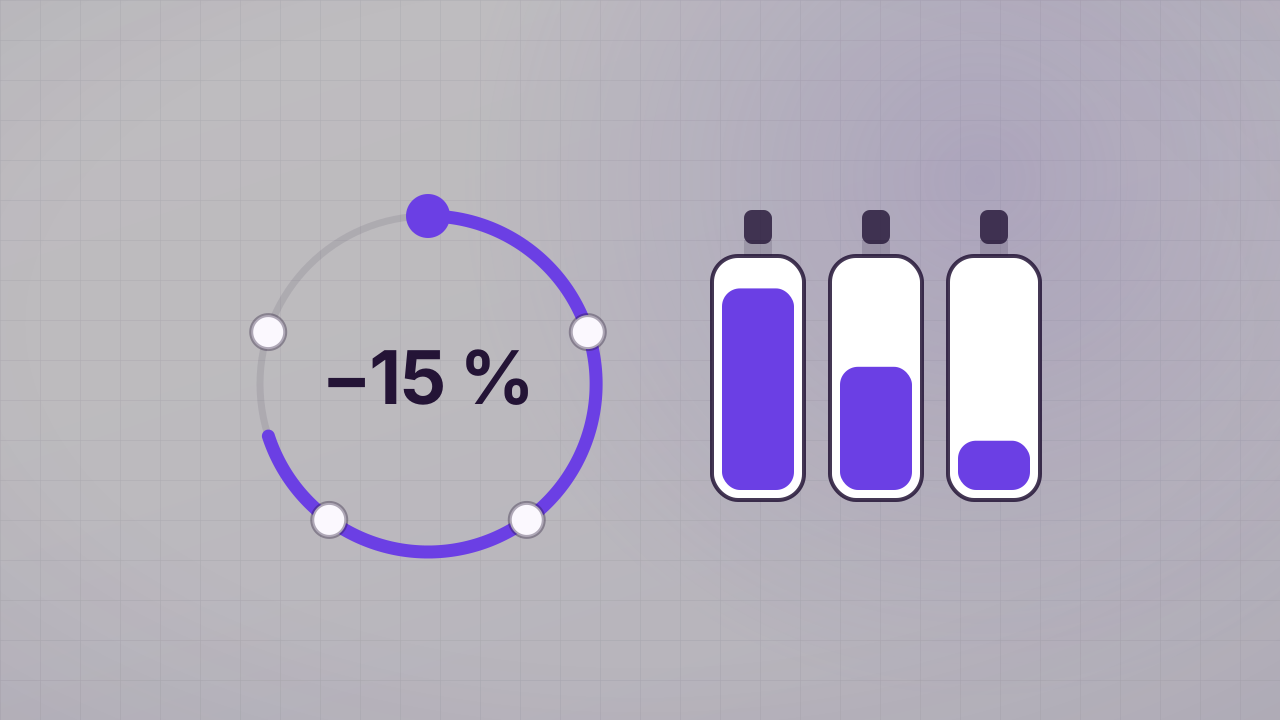
Most saving strategies require you to wait for something. With a subscription discount it is the other way round: the discount arrives permanently and with no promotional window, but you commit to a recurring delivery. For the right product group that is the best trade in the whole catalogue — for the wrong one it is a subscription you forget about and then pay for.
How the mechanism works
The principle is simple: instead of ordering a product once, you order it on a fixed rhythm — every four weeks, every two months, every six months. In return you get a reduction on every delivery.
At Amazon the base discount per item is at least five per cent. The decisive lever is the tiering: bring five or more subscription items together in the same delivery window and the reduction rises to up to 15 per cent per item. Delivery is free, cancellation is possible at any time, and there is no minimum term.
That threshold of five is the whole point. Between two individual subscriptions and five bundled ones lies three times the discount rate — with an identical basket. Anyone using the subscription discount should therefore not use it item by item but deliberately align the delivery dates on the same day.
What it is worth it for
The question is not what you buy often, but what you consume predictably and in a constant quantity. That is exactly where the difference lies.
Ideal: pet food, detergent, dishwasher tablets, coffee, nappies, toilet paper, care products, contact lens solution, filter and wearing parts for household appliances. Consumption is constant, the product does not spoil, and you rarely switch brand.
Conditional: food with a short shelf life, cosmetics with scent variants, anything you like to experiment with. Here the subscription ties you to a decision you may want to revise.
Unsuitable: anything you need irregularly. A subscription for a product that sits unopened for three months saves five per cent on goods you do not need — that is not a discount but an advance payment to yourself.
The three traps
Trap 1: the price is not frozen. This is the most important and least known point. The discount rate is fixed, the base price is not. The reduction is calculated on the price on the day of delivery — if the item's price rises in between, so does your subscription price. A five per cent reduction on a price that has gone up twenty per cent is a loss that feels like a discount.
In practice that means a subscription does not replace price monitoring, it only reduces it. Checking your active positions against the current market price twice a year is enough — how to judge that is in our guide to reading price history.
Trap 2: shrinkflation slips through unnoticed. A subscription does not protect you from the pack shrinking. On the contrary: because you no longer actively pick the item, the smaller fill quantity is noticed even later. The unit price per kilo or litre is the only reliable measure here too — the mechanics are described in our guide to shrinkflation.
Trap 3: the cupboard fills up. The classic subscription mistake is too short a rhythm. Get detergent every four weeks while using up a pack every seven, and after a year you have six spare packs in the cupboard — bought at a discount, but bought. Better to choose the interval too long and bring a delivery forward when needed than the other way round.
Comparing with the promotional price
A question that comes up on every promotional day: should you stockpile consumables when they are on offer instead?
Usually not. A one-off promotional discount of 20 per cent sounds like more than 15 per cent permanently — but it applies to one order, and after that you pay full price again. Over a year the permanent rate almost always beats the occasional one, and it costs no attention. The built-in saving route is stronger here than the advertised one; we describe the same pattern in our overview of Amazon's savings mechanics.
The exception is genuinely extraordinary offers — the lowest percentage bands, which only appear rarely in a category. Then stockpiling is worth it, provided the goods keep long enough.
What is happening in this category right now
The discount distribution in your marketplace's current groceries and drugstore feed — as a yardstick for when a promotional price actually beats the permanent subscription rate:
17 %
Median discount across all running offers
18 %
of offers reach 40% or more
100
discounted offers analysed
Live sample of 100 current Grocery offers from your Amazon marketplace. The distribution shifts by the hour — which is why the ranking matters, not the individual percentage.
* Prices incl. VAT, plus shipping if applicable. Prices may have changed since the last update; the current price on the merchant’s site applies. Real-time updates are not technically possible.
About the author
Yahya Bolat
Redaktion · hyped4you
You might also like

How to pay less on Amazon: 7 legitimate tricks — from vouchers to Amazon Resale
Vouchers, Amazon Resale returns, Subscribe & Save, marketplace price gaps: Amazon has more built-in savings mechanics than most people ever use. The full rundown, small print included.
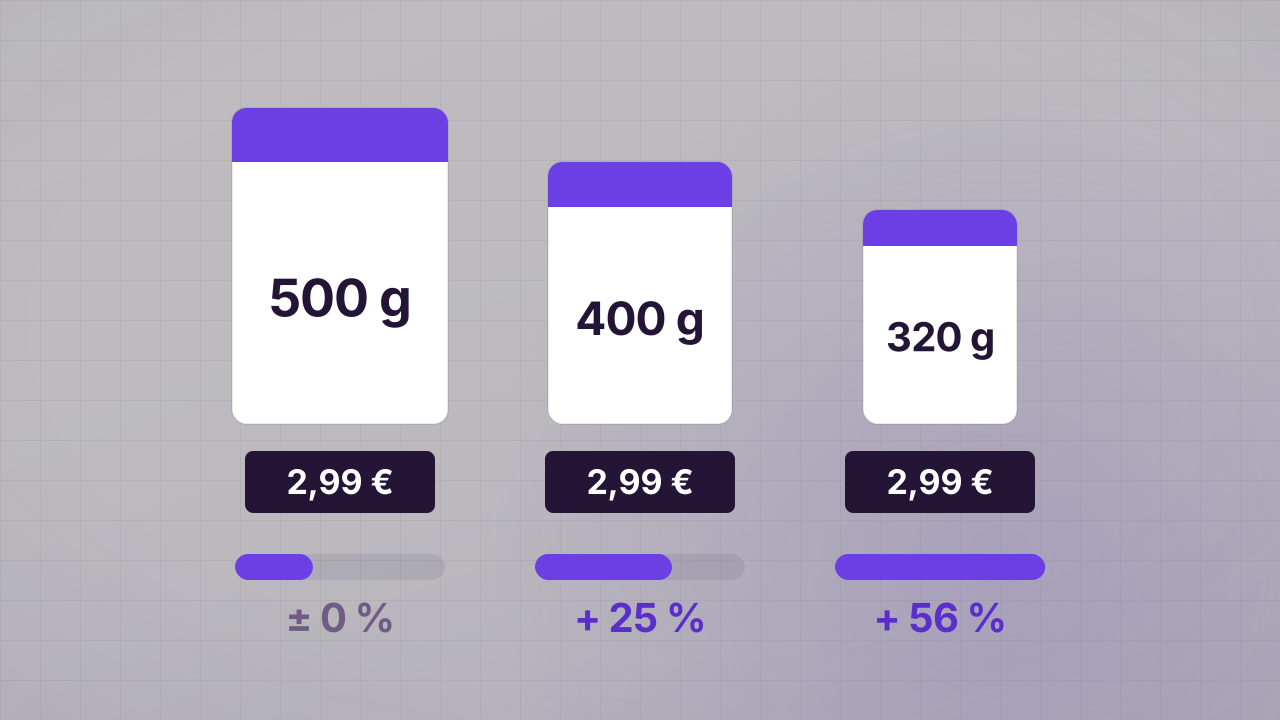
Same price, less inside: how shrinkflation and price psychology cancel out your discount
Not every price rise shows up on the price tag. When the pack shrinks or the recipe gets cheaper, the price only appears to fall — and the unit price is the one antidote.