
Prime Day and Prime Big Deal Days: two events, two entirely different discount logics
Amazon now runs two big member events a year — one in summer, one in October. They differ more than the shared name suggests. What is genuinely cheap, and when.
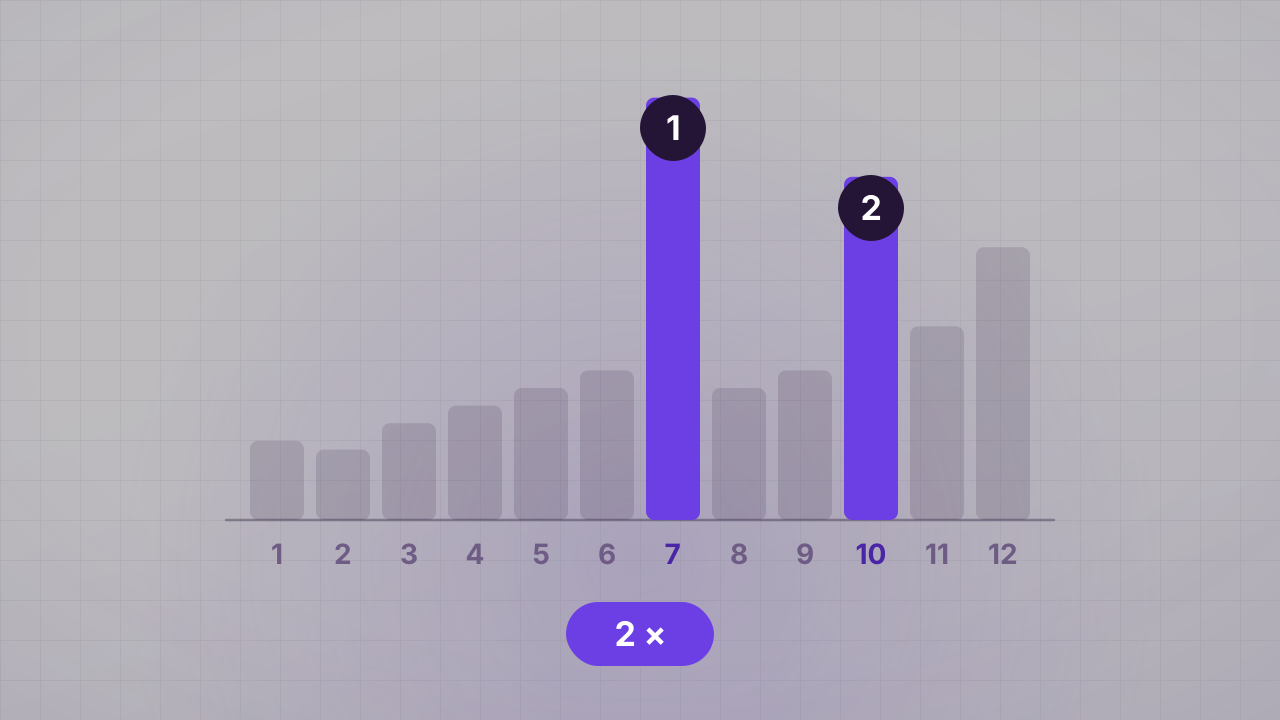
Prime Day is the only large shopping event that belongs to a single retailer — and the only one you need a membership for. Both facts shape which discounts show up there. There are now two such dates a year, and anyone treating them as the same event in two editions regularly buys at the wrong moment.
The dates
The summer event. Traditionally in July, unusually early in 2026: from 23 to 26 June, across four days. Stretching from two days to four is now the norm.
The autumn event — Prime Big Deal Days. Early October, usually across two days. It is the unofficial starting gun of the discount season and sits deliberately about six weeks ahead of Black Week.
Both dates are reserved for members. Both are usually confirmed officially only a few weeks in advance.
Why the two dates work differently
This is the point where most guides stop — and it is the most practically important one.
The summer event stands alone. It faces no competitive pressure from other major events. The discounts are correspondingly selective: very deep on own-brand hardware, solid on household and everyday products, restrained on anything where Amazon is not the only relevant seller.
The autumn event stands in the shadow of Black Friday. Its job is to capture spending power before the competition strikes in November. From that follows an uncomfortable rule: much of what is reduced in October will be the same price or cheaper six weeks later. The autumn event is therefore mainly worthwhile for things you need now — and for categories that experience says will not improve in November.
Where the discounts run deepest
Across both dates a stable pattern emerges.
Most heavily reduced: the platform's own devices — streaming sticks, smart speakers, e-readers, security cameras. These are not ordinary discounts but subsidised entry prices: the hardware earns through the ecosystem, not through the margin. If you want such a device anyway, you buy it on these dates and never otherwise.
Clearly reduced: everyday goods and consumables, small household appliances, own-brand accessories. For consumables it is worth checking whether the same saving is not available permanently through a subscription discount — in which case the event price is no reason to stockpile.
Occasionally strong, but unreliable: branded electronics. Everything here depends on the individual offer. The reference point must never be the RRP, only the real market price of the preceding weeks; how to read that is in our price history guide.
Barely moving: new releases, consoles, current LEGO sets. The same logic as in November.
The mechanics beside the discount
One aspect regularly gets lost: on these dates several savings mechanisms run in parallel and can be added together. Coupons on the product page, time-limited lightning deals, discounts on warehouse returns and increased subscription benefits all apply at once. Anyone looking only at the percentage badge regularly leaves a second reduction on the table. Our overview of the built-in savings routes and the guide to buying returns show where they sit.
Conversely: a lightning deal with a countdown creates pressure that has nothing to do with the price. The question stays the same as on any other day — is the price good if you think the countdown away?
What is actually reduced right now
For context: the current discount distribution in your marketplace's offer feed. Anyone who knows what counts as a normal and what as an exceptional percentage in their market needs considerably less comparison work on event days.
22 %
Median discount across all running offers
10 %
of offers reach 40% or more
100
discounted offers analysed
Live sample of 100 current offers from your Amazon marketplace. The distribution shifts by the hour — which is why the ranking matters, not the individual percentage.
You will find the complete annual overview — including which dates are worth it for which category — in our shopping calendar.
* Prices incl. VAT, plus shipping if applicable. Prices may have changed since the last update; the current price on the merchant’s site applies. Real-time updates are not technically possible.
About the author
Yahya Bolat
Redaktion · hyped4you
You might also like
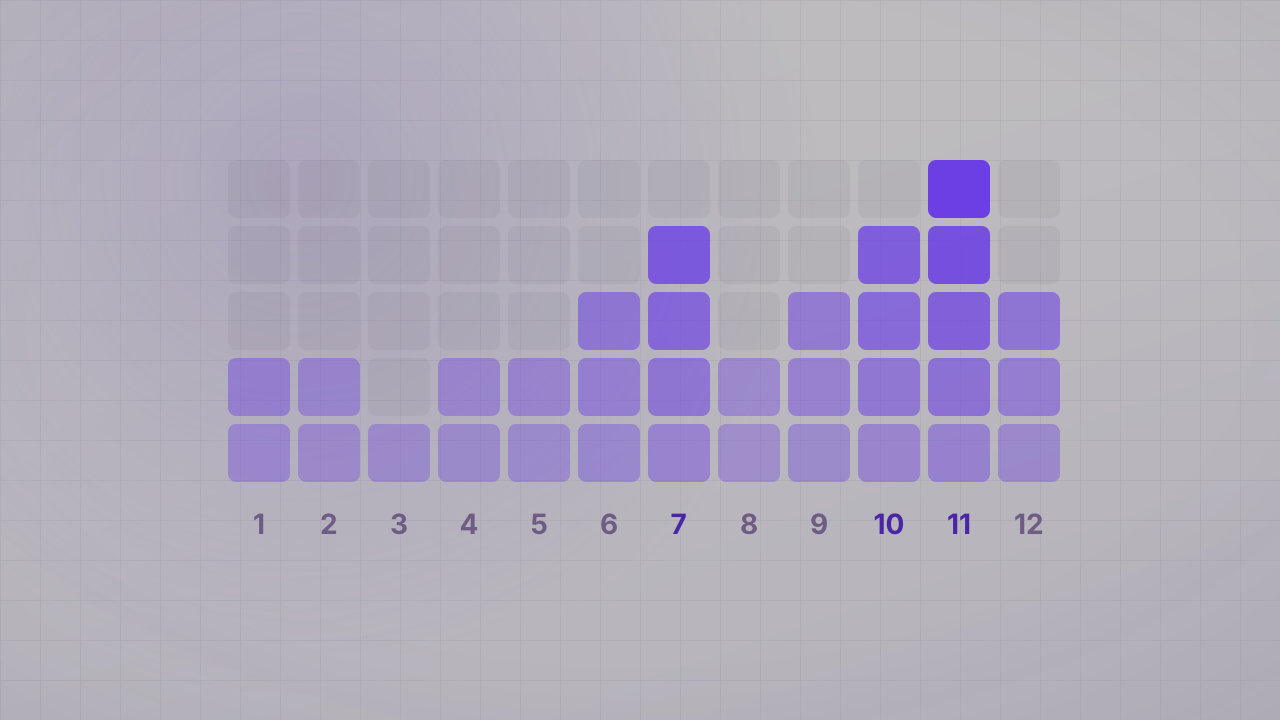
Shopping calendar 2026/27: the cheapest time to buy almost anything
Prime events, Singles' Day, Black Week, January sales: know the discount calendar and you buy the same products for considerably less. All the dates, plus the best category for each event.
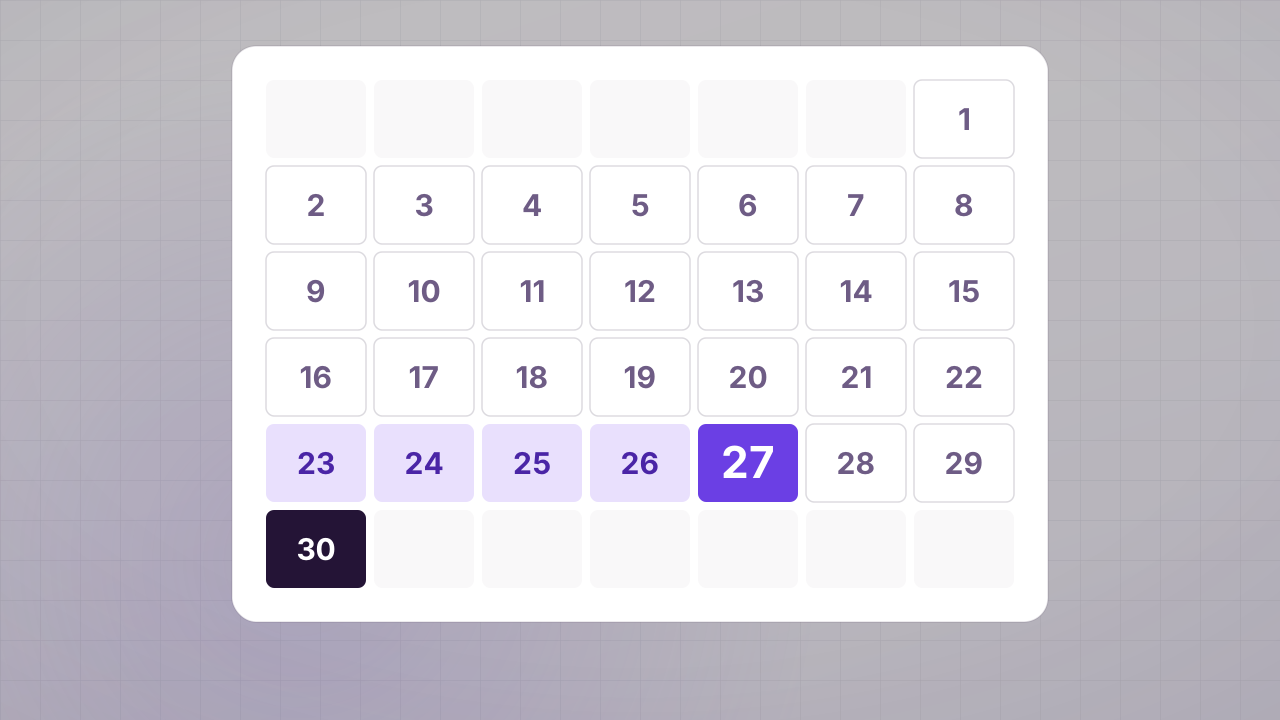
Black Friday 2026: dates, real discounts and the categories where waiting pays
Black Friday falls on 27 November, Black Week starts on the 23rd. The schedule, the categories with a genuine reduction, and the ones where November is the worst time to buy.