
Amazon Warehouse: What buying returns really saves — and when the condition grade misleads
Inspected returns with a condition discount are one of the steadiest ways to save. What the four grades mean in practice, where the discount is real and where the purchase becomes a lucky dip.

There is one source of savings at Amazon that has no promotional window, hangs on no calendar, and is still overlooked by most people: the retailer's own returns. Whatever a customer sends back gets inspected, sorted into a condition grade and resold at a discount — all year round, no countdown, no percentage badge on the homepage. In our overview of Amazon's built-in savings that was a single paragraph. It deserves more, because this discount comes from a real cause: the condition of the goods. Not from a reference price somebody invented.
Why this discount is different from any promotional one
An ordinary promotional discount is a marketing decision. It can be genuine; it can also — as described in our guide to fake discounts — be pure cosmetics, because nobody ever paid the crossed-out price. A returns discount, by contrast, has a physical reason: the box is open, a cable is missing, the casing has a scratch. The retailer can no longer sell the item as new and passes the loss in value on to you.
That makes the price verifiable. You do not have to guess whether the discount is real — you only have to judge whether the reason behind it bothers you. That is a far easier question.
The four condition grades, translated into practice
Amazon sorts returns into four levels. The official descriptions are cautiously worded; here is what they mean day to day.
- Like new — usually just opened, often never used. The classic "ordered the wrong thing, sent straight back" item. Visually indistinguishable from new; frequently only the outer packaging is torn. The discount is smallest here and the risk is effectively zero.
- Very good — minimal traces you have to look for: fine scratches on the underside, a fingerprint in the finish. Tested and technically flawless. For most purchases this is the best balance between price and peace of mind.
- Good — visible signs of use. Function has been tested, but the packaging is often damaged or replaced. For anything that disappears into a cupboard or under a desk this is entirely irrelevant. For a gift it is not.
- Acceptable — pronounced marks: scratches, dents, worn edges. Function is still guaranteed, but accessories, spare parts or the original packaging may be missing. This is the grade where the price looks most tempting and disappointment is most likely.
The decisive line is rarely the grade itself — it is the comment field underneath. That is where the specific flaw of this one unit is described: "original packaging damaged", "accessories missing", "signs of use on the casing". Two items in the same condition grade can differ enormously. Anyone who reads only the grade and skips the comment is buying a lucky dip.
Where the discount is large — and where it is not worth it
The discount tracks how strongly the condition depresses the value. That produces a clear pattern:
Particularly worthwhile: large, robust things where the transport damage happens to the box rather than the device — kitchen appliances, tools, vacuum cleaners, monitors, furniture. Here the damaged outer packaging is often the only reason for the discount, and you were going to throw the cardboard away anyway.
Usually worthwhile: electronics without wearing parts, where you do not care about looks — routers, hard drives, chargers, desk accessories.
Careful: anything with a battery. A returned item may have sat in a warehouse for months, and remaining capacity appears in no condition grade. With headphones, power banks and cordless vacuums the condition discount is often smaller than the wear the battery has already been through.
Rarely sensible: very cheap items. Below roughly 20 euros the discount barely justifies the effort and the residual risk — and condition grades vary most widely in that range.
Your rights remain fully intact
The most important and most widely misunderstood point: a returned item is not a private sale. You are still buying from a trader, so the same statutory rights apply — the right to cancel as well as the statutory guarantee. If the delivered condition does not match the description, that is not bad luck, it is a defect. Which deadlines apply exactly, and where the difference lies between cancellation, statutory guarantee and manufacturer warranty, is covered in our guide to returns and cancellation rights.
In practice that means: when in doubt, order the better condition grade and send it back if it disappoints you. On this purchase the buyer is not the one carrying the risk.
The two mistakes that eat up the advantage
First: measuring against the RRP. The percentage on a returned item often refers to the new price or the manufacturer's RRP — not to what new stock actually costs right now. If the product already sells 25 % below RRP, a "−30 %" return is only five per cent cheaper than new, and you are accepting scratches for it. The only meaningful comparison is against the current market price; how to recognise that is shown in our guide to reading price history.
Second: waiting for the perfect condition grade. Nothing restocks. Unlike new goods, every unit is a one-off, and "like new" at a dream price does not reliably come back around. People who wait usually end up buying new at full price.
In short
Buying returns is the most honest discount in the catalogue, because it has a verifiable reason. Read the condition grade, and above all read the comment beneath it; compare against the real market price rather than the RRP — and avoid battery-powered devices when the discount is small. Then this is one of the few sources of savings that works all year round, without waiting for any event.
* Prices incl. VAT, plus shipping if applicable. Prices may have changed since the last update; the current price on the merchant’s site applies. Real-time updates are not technically possible.
About the author
Yahya Bolat
Redaktion · hyped4you
You might also like

How to pay less on Amazon: 7 legitimate tricks — from vouchers to Amazon Resale
Vouchers, Amazon Resale returns, Subscribe & Save, marketplace price gaps: Amazon has more built-in savings mechanics than most people ever use. The full rundown, small print included.
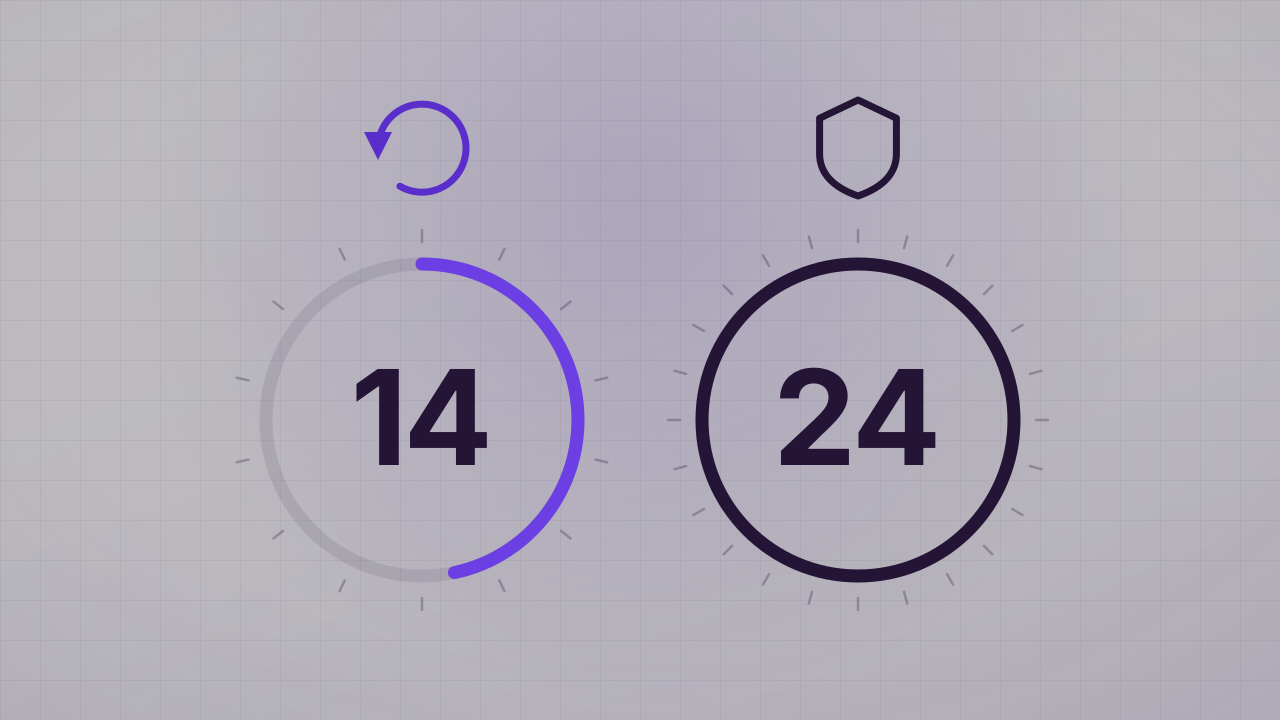
14 days to cancel, 2 years of cover: which rights actually apply when you buy a deal
Cancellation, statutory guarantee and manufacturer warranty are three different things — and only two of them are yours by law. The deadlines, the exceptions, and what retailers add voluntarily.