
Buying headphones: why the best price appears the day the successor is announced
With noise-cancelling headphones the price follows no calendar but the product cycle. Know when the next model is due and you regularly pay half for the same device.
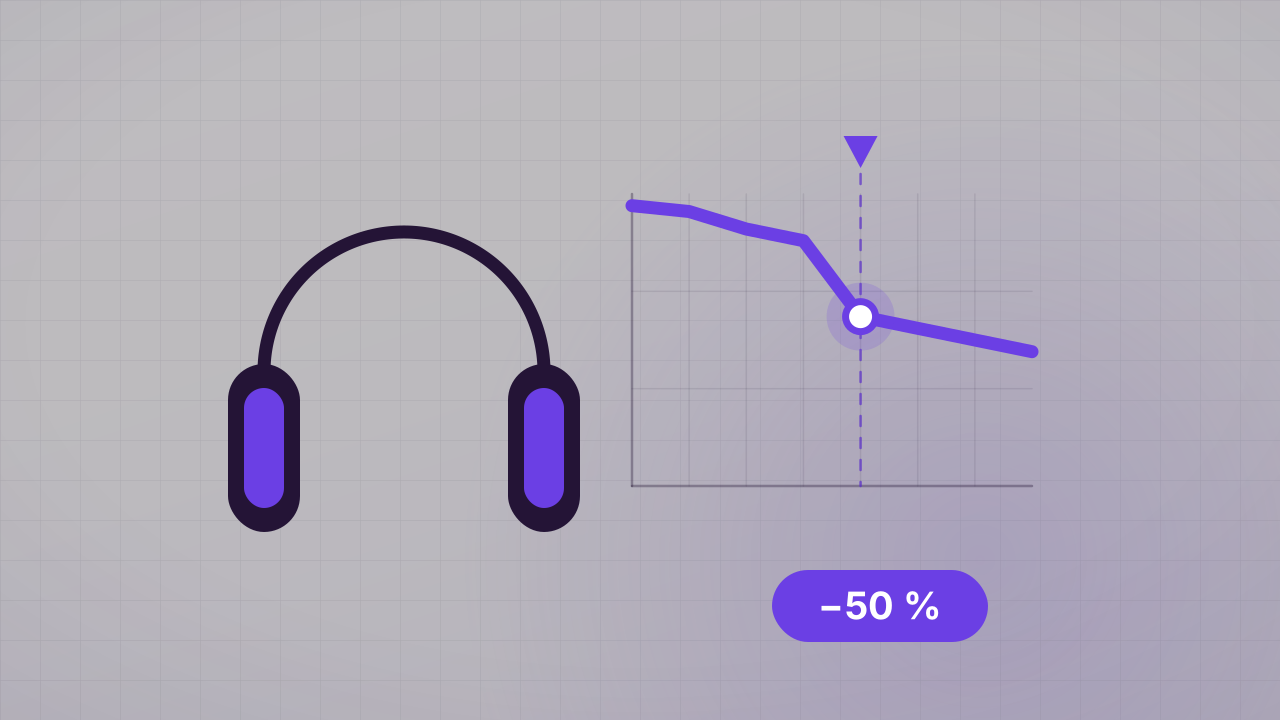
Headphones are one of the most rewarding categories for the patient — and one of the most expensive for the impatient. The reason is a price curve that is almost predictable: a flagship launches high, holds its price for the best part of a year, and then falls in a single movement. The trigger is never a promotional day. It is always the announcement of the successor.
We have asked the same question about gaming hardware. With audio the answer is even clearer, because the product cycles of the big manufacturers run so regularly.
The staircase that never comes back
The typical curve of a premium headphone has three phases.
Phase 1 — the launch price. Four to six months practically unchanged. Discounts in this period are in the single digits and are cosmetic.
Phase 2 — erosion. From around the sixth month the price begins to fall, slowly at first, then in steps. Promotional days accelerate this but do not cause it.
Phase 3 — the drop. As soon as the successor is announced, the trade releases the outgoing model. This is where the big jumps happen: reductions of 40 to over 50 per cent against the launch price are normal in this category, not exceptional. A model that launched at around 380 euros regularly lands below 200 in this phase.
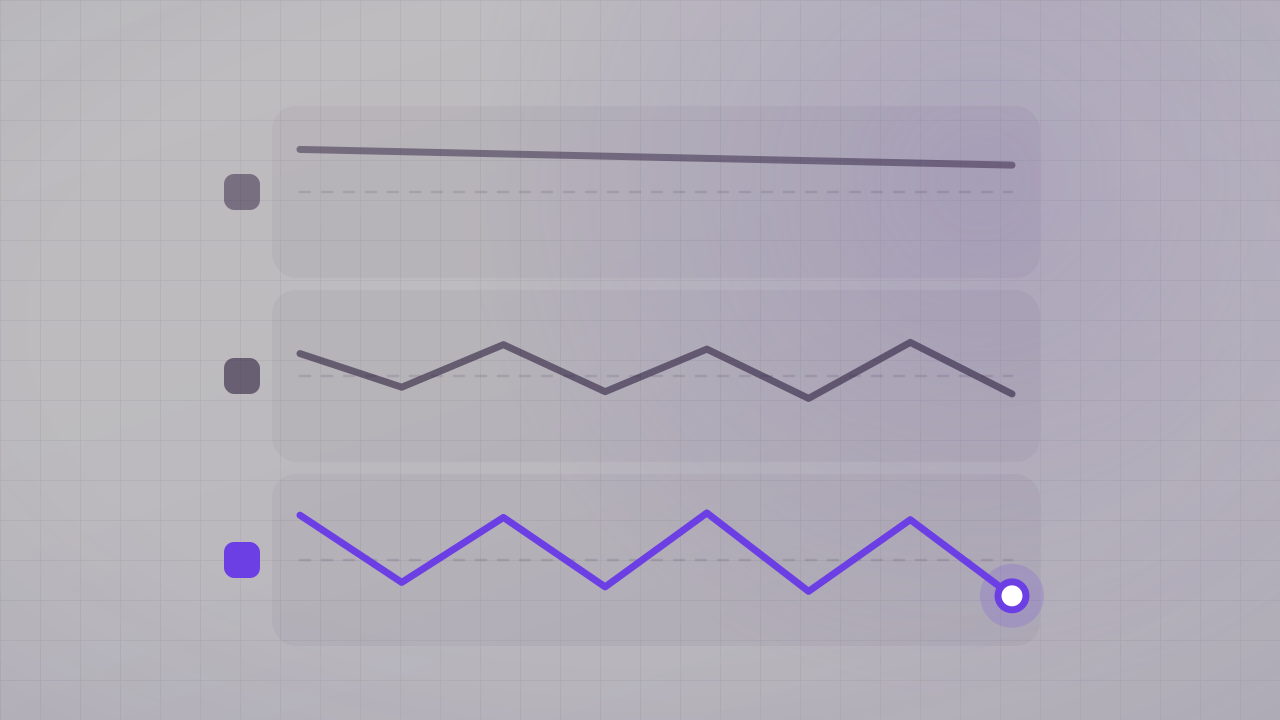
The shape is what matters: it is a descending staircase, not a sawtooth. The price does not return to its old level. Miss the drop and you do not have to wait for a repeat — you simply buy further down the same staircase. Which other curve shapes exist and how to tell them apart is in our guide to reading price history.
When the announcements come
The major audio manufacturers follow a remarkably stable pattern: new flagship headphones are presented in late summer and early autumn, in time for the Christmas trade and aligned with the IFA in early September. Between two generations there are usually eighteen months to two years.
From that follows the most practically useful sentence in this guide: September and October are the strongest months of the year for outgoing models — ahead of Black Friday. Buy in November and you often get the same price but compete with considerably more buyers over considerably scarcer stock.
There is a second movement keeping the market busy: manufacturers now follow up with stripped-down or reissued variants of older models, positioned well below the current flagship. For buyers that means the gap between "current" and "good enough" keeps widening in price terms.
Is the outgoing model even worth it?
Almost always — and that is the real point. With noise-cancelling headphones the progress between two generations has been small for some years: slightly better noise cancellation, slightly longer battery life, a reworked app. What barely changes is what matters day to day — comfort, sound character, build quality.
An outgoing model at half price is therefore not a compromise in this category but usually the more sensible choice. Three exceptions are worth checking:
- Bluetooth standard and codecs, if you need a particular device or low-loss transmission.
- Multipoint, the parallel connection to two devices. Older generations sometimes cannot do this, or only partially.
- The battery, if you buy used or as a return. Remaining capacity appears in no condition description — see our guide to buying returns.
The price brackets and what they deliver
Broadly, this category shows strongly diminishing returns. Between a very cheap and a mid-range model there are worlds; between a mid-range and a flagship there is fine-tuning. Unless you listen for hours a day in a loud environment, you get more out of a reduced previous-year flagship than out of a new mid-range model at the same price.
How the discounts look in your market right now
The analysis below reads the current electronics feed of your marketplace and shows how discounts are distributed there — the benchmark an individual headphone offer has to be measured against.
20 %
Median discount across all running offers
9 %
of offers reach 40% or more
100
discounted offers analysed
Live sample of 100 current Electronics offers from your Amazon marketplace. The distribution shifts by the hour — which is why the ranking matters, not the individual percentage.
And here are the most heavily reduced items from the same category:
Electronics: what is currently above 40%
Picked from your marketplace's running feed: the deepest discounts with a credible rating behind them. Still check the price history before you buy.

In short
Do not wait for Black Friday, wait for the successor announcement — in this category it almost always comes in late summer. Buy the outgoing model, not the current one. And measure the discount against the real market price of the preceding weeks, never against the RRP: with headphones there is regularly a third between the two.
* Prices incl. VAT, plus shipping if applicable. Prices may have changed since the last update; the current price on the merchant’s site applies. Real-time updates are not technically possible.
About the author
Yahya Bolat
Redaktion · hyped4you
You might also like
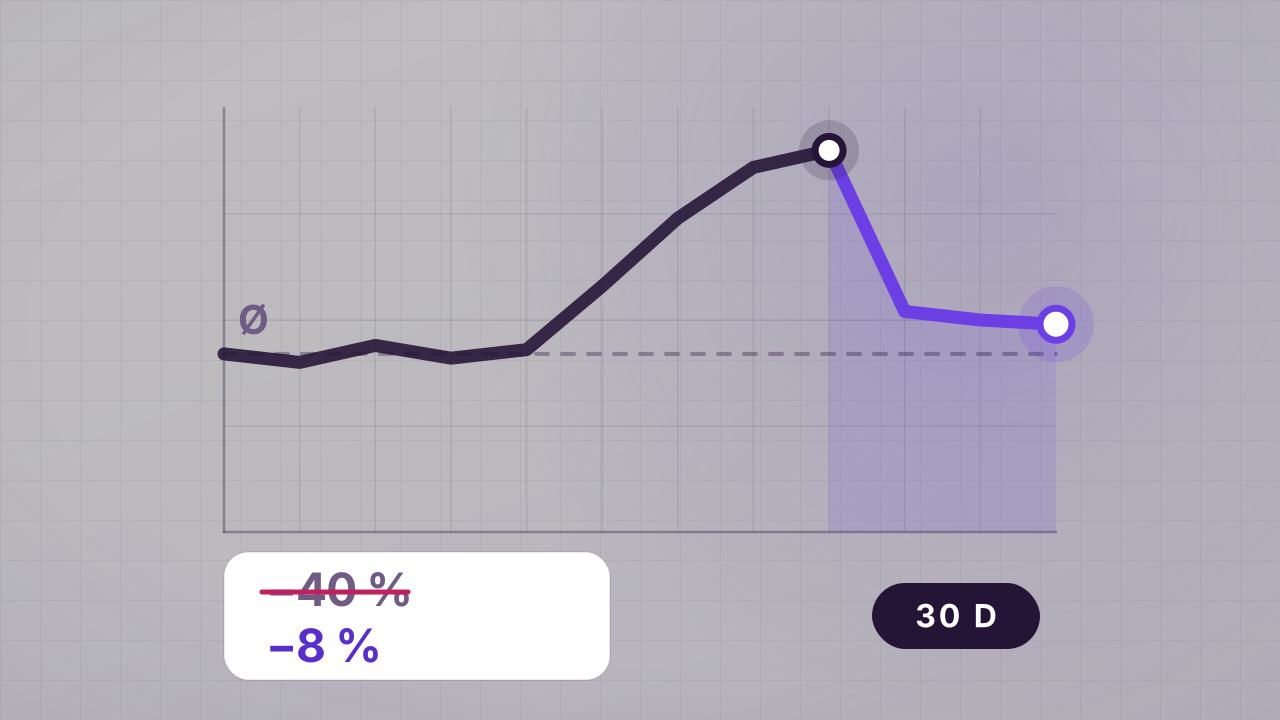
Reading price history: how to tell whether that low price really is one
A single price tells you nothing. Only the curve behind it reveals whether you are looking at a genuine low or the end of an artificial rise. Four curve shapes and how to read them.
Console, accessory, game: why every gaming product group has its own discount rhythm
Consoles almost never drop in price, accessories drop brutally, games follow a calendar and subscriptions only go up. Knowing the three rhythms buys the same setup for far less.