
Same price, less inside: how shrinkflation and price psychology cancel out your discount
Not every price rise shows up on the price tag. When the pack shrinks or the recipe gets cheaper, the price only appears to fall — and the unit price is the one antidote.
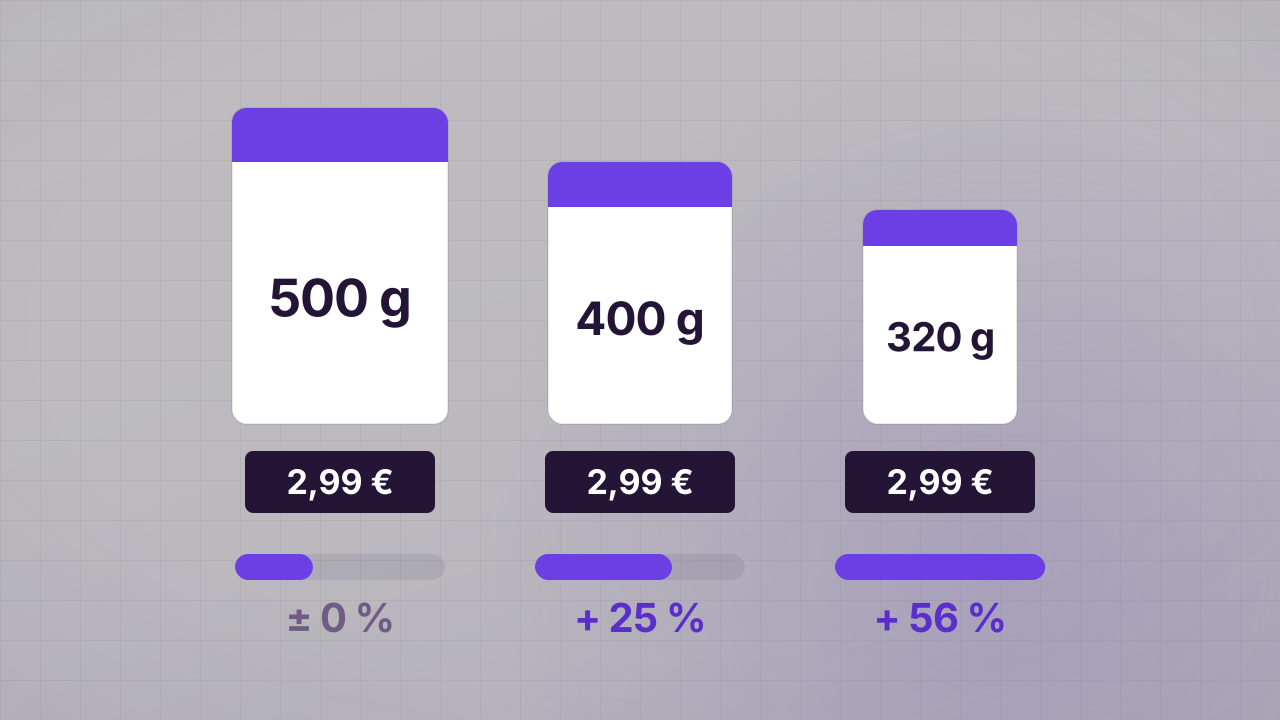
There is a price rise that raises no price. The pack looks the same as always, the number on the shelf is unchanged — only there are now 400 grams inside instead of 500. Arithmetically that is 25 per cent more per kilo. Perceptibly it is nothing at all.
This is neither a fringe phenomenon nor a food-only topic. It affects detergent, coffee, pet food, cosmetics, printer cartridges and kitchen roll — in other words almost everything that gets repurchased regularly. And it cancels out precisely the comparisons that careful shoppers otherwise rely on.
Two variants of the same idea
Shrinkflation is the visible variant: the quantity falls, the price stays. Fewer grams, fewer millilitres, fewer sheets on the roll. Consumers notice it relatively often, because the packaging sometimes does change.
Skimpflation is the invisible one: the quantity stays, the composition gets cheaper. The expensive ingredient is replaced by a cheaper one, the proportion of quality components drops, the manufacturing gets simpler. Studies commissioned by consumer organisations show this variant is spotted far less often than a reduction in quantity — it is not written on the pack, after all.
What is interesting is where the annoyance comes from. Surveys consistently reach the same conclusion: it is not the price increase itself that is felt to be unfair — most people accept that costs rise. What is felt to be unfair is that it is hidden. That is why the policy answer is not price regulation but a labelling requirement: anyone reducing the fill quantity at an unchanged price should have to say so.
The unit price is the only reliable tool
There is exactly one antidote to both, and it sits in small print under almost every price: the unit price — the price per kilogram, litre, metre or item.
It is the only figure that automatically accounts for a change in quantity. Two packs whose prices look identical differ in unit price immediately. Get into the habit of reading only that number on consumables and you become practically immune to shrinkflation.
It does have one limit you need to know: the unit price only compares the present. It shows which of the packs on the shelf is cheaper today. It does not show that the same brand was thirty per cent cheaper per kilo six months ago. For comparison over time you still need a look at the price history.
Why a discount on a shrunken pack deceives twice over
Here two topics meet. A crossed-out price refers to the pack price, not the unit price. Reduce the fill quantity and then advertise the smaller pack at "−20 %", and the discount is formally correct — calculated against the previous price of that same, smaller pack. Per kilogram the item can still be more expensive than it was before the promotion.
This is the combination the checks from our guide to fake discounts cannot catch either: there the question is whether the reference price is honest. Here it is honest — it just refers to a different quantity.
The price psychology behind it
That all this works comes down to a few well-studied quirks of perception.
The anchoring effect. The first number you see determines how every following one is judged. That is why the crossed-out price sits on the left and larger than it needs to be. Accept the anchor and you have made your judgement before reading the real price.
The price threshold. 9.99 instead of 10.00 — the difference is one cent, the perceived price bracket is a different one. The effect is well known and keeps working anyway.
The reference shift. A very expensive product next to a mid-priced one makes the mid-priced one look cheap. The expensive one does not have to sell at all; it has done its job by standing there.
The volume illusion. Volume is estimated worse than length. A pack that is slightly narrower but the same height looks unchanged — even though noticeably less is inside. That is exactly what shrinkflation aims at.
None of these mechanics is fraud. They are legal, widespread, and they work on people who know about them. You cannot escape them through attention, only through a rule that requires no attention.
The rule
For consumables it reads: read the unit price, ignore the pack price. For everything else, what we showed in our analysis of the discount distribution still applies — the percentage alone says nothing until you hold it against the real market.
And for the product groups where repurchasing is predictable anyway, there is a route that removes most of the comparison work: a subscription with a fixed discount rate. It does not protect you from shrinkflation — but it takes the price volatility out of a category where it is particularly hard to see through.
* Prices incl. VAT, plus shipping if applicable. Prices may have changed since the last update; the current price on the merchant’s site applies. Real-time updates are not technically possible.
About the author
Yahya Bolat
Redaktion · hyped4you
You might also like
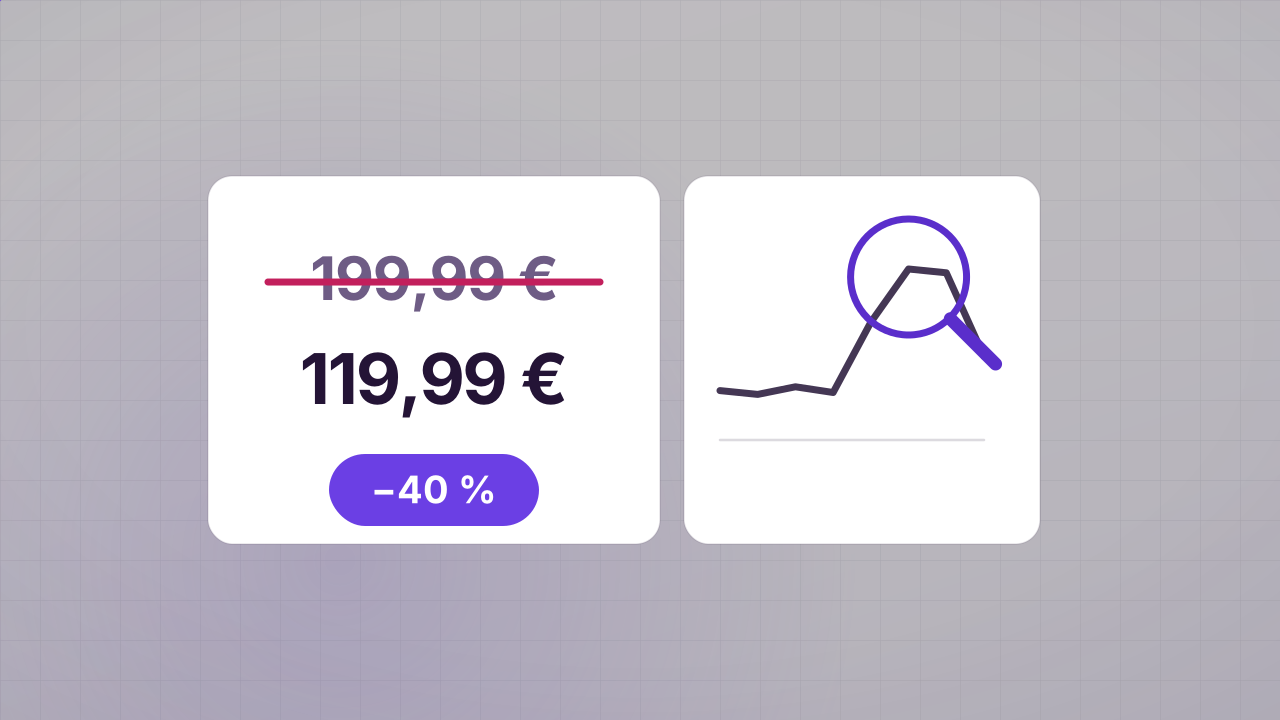
How to spot fake discounts: catch inflated was-prices in 2 minutes
70% off sounds fantastic — until you realise nobody ever paid the crossed-out price. These five checks let you spot inflated reference prices before they cost you money.

Subscribe and save on consumables: when it pays off and when it becomes a trap
Up to 15 per cent permanently on things that run out anyway — the subscription discount is the most underrated saving route. But only as long as you keep an eye on the price.