
Understanding LEGO prices: why minus 20 per cent off the RRP is often no discount at all
Hardly any product category has such a stable RRP and such a much lower market price. Confuse the two and you mistake the normal price for a bargain. The thresholds that actually count.
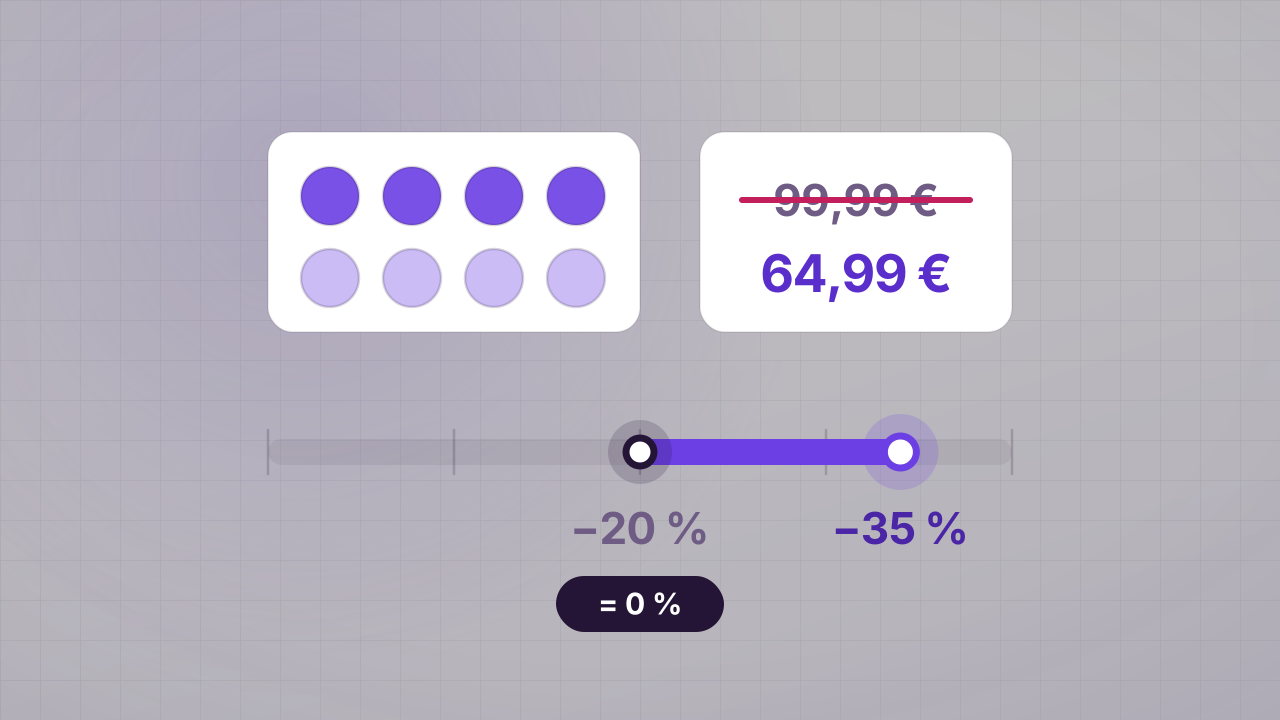
There are few product categories where the recommended retail price is taken as seriously as with LEGO — and few where it says so little about the actual price. The RRP is printed on the box, it is stable for years, and practically every discount in retail is calculated against it. The problem: the open market sits well below it almost all the time, and permanently so.
That makes LEGO the textbook example of what we described generally in our guide to fake discounts — except that here nobody has to cheat. The arithmetic is correct, it is just worthless.
The gap between RRP and market price
A typical set with an RRP of 99.99 euros sells in retail at around 75 euros on a permanent basis. That is 25 per cent below RRP — as the normal state of affairs, not as a promotion.
If that same set is then advertised at "−20 %", it lands at around 80 euros. That is more expensive than the price it had all along. The discount is correctly calculated, properly advertised, and still a worse offer than no discount at all.
From this follows the only rule you really need in this category: the RRP is not a reference point. The usual market price is the reference point.
From when a discount really is one
Because the base reduction is already priced in, the thresholds shift markedly upwards compared with other categories:
- Regular sets — the broad mass from the large themes: it gets interesting from about 35 to 40 per cent below RRP. Anything below that is the normal price with a label.
- Exclusive and licensed sets — models that run through only a few channels: here 10 to 15 per cent is already a strong offer, because the market price barely falls below the RRP.
- Small sets and polybags: percentage figures say little here. The sensible comparison runs through price per piece.
The cycle: why sets change price twice at the end
LEGO retires sets on a schedule, usually after one to three years. Around that ending two opposing movements occur, and knowing them makes you a better buyer.
First the price falls. In the months before retirement, retailers clear their stock. This is regularly the low point across a set's entire life cycle — considerably lower than any promotional price during regular availability.
Then it rises. Once the remaining stock has sold through, the direction reverses. Sought-after sets — especially licensed ones and large models — rise on the secondary market, sometimes well above the original RRP.
For buyers that means: the window shortly before retirement is the best moment there is. For anyone who wants a particular set anyway, it is the one moment where waiting is rewarded and hesitating is punished — unlike with electronics, where the price almost always keeps falling over time. Our comparison of curve shapes shows how differently categories behave.
What actually happens on the big promotional days
The sobering observation: LEGO new releases rarely move far even on Black Friday. Current sets are in demand, they sell without a reduction, and the advertised percentages again refer to the RRP.
What genuinely does get heavily reduced on promotional days are retiring sets and slow sellers — in other words precisely the category already reaching its cycle low point. The promotional day accelerates that; it does not cause it.
A second point often gets overlooked: giveaways. Small free sets above a certain order value are a widespread alternative to a price reduction in this category. Economically that is a discount — but only if you actually want the giveaway. Otherwise it is a surcharge on a basket you would otherwise have kept smaller. The same logic as the console bundles we described in our gaming guide.
The check in four steps
- Find the piece count and set price, work out the price per piece.
- Look up the usual market price of recent weeks — never take the RRP as the basis.
- Check the status: is the set new, mid-cycle, or close to retirement? Only in the last case is urgency justified.
- Be honest about giveaways: do you want the giveaway, or do you just want to reach the order threshold?
What is in the range right now
The discount distribution in your marketplace's current toy feed — as a yardstick for where an individual offer in this category actually stands:
22 %
Median discount across all running offers
14 %
of offers reach 40% or more
100
discounted offers analysed
Live sample of 100 current Toys offers from your Amazon marketplace. The distribution shifts by the hour — which is why the ranking matters, not the individual percentage.
And the most heavily reduced items from the same category:
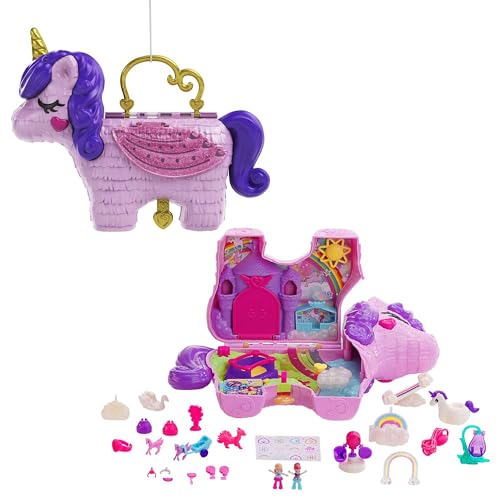
Toys: what is currently above 40%
Picked from your marketplace's running feed: the deepest discounts with a credible rating behind them. Still check the price history before you buy.


* Prices incl. VAT, plus shipping if applicable. Prices may have changed since the last update; the current price on the merchant’s site applies. Real-time updates are not technically possible.
About the author
Yahya Bolat
Redaktion · hyped4you
You might also like
How to spot fake discounts: catch inflated was-prices in 2 minutes
70% off sounds fantastic — until you realise nobody ever paid the crossed-out price. These five checks let you spot inflated reference prices before they cost you money.
Reading price history: how to tell whether that low price really is one
A single price tells you nothing. Only the curve behind it reveals whether you are looking at a genuine low or the end of an artificial rise. Four curve shapes and how to read them.