
Stacking cashback, coupons and voucher codes: the order is what decides
Three layers of discount can be stacked — but only if you trigger them in the right order. How attribution works, which click kills your cashback, and where the stacking stops.
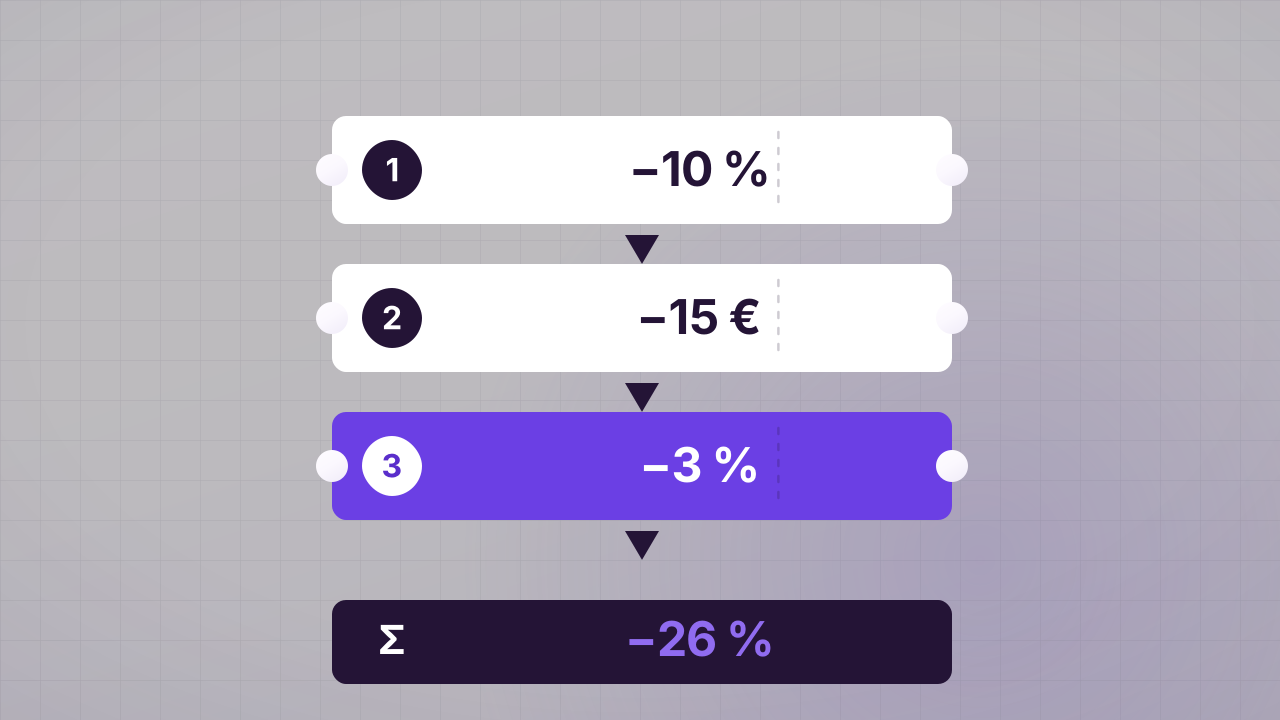
Most routes to a discount do not exclude one another. A coupon on the product page, a voucher code in the basket and a cashback refund afterwards act at three entirely different points — in theory they add up. In practice, stacking nearly always fails for the same reason: the order.
Three layers, three moments
It helps to be clear about when each layer takes effect.
The coupon sits on the product itself and is deducted at the checkout. It comes from the retailer or the manufacturer, often applies only to one variant, and frequently only once per customer. It is the only one of the three layers the product offers you directly — and therefore the one most often overlooked.
The voucher code is redeemed in the basket and reduces the subtotal. Usually only one applies per order; several codes can as a rule not be combined.
Cashback does not act on the purchase price at all but afterwards: you pay the full amount and receive a share back weeks later. The source is a referral commission the retailer would have paid anyway, which the cashback platform shares with you.
Because the third layer is fed by a commission, it depends on a technical condition the other two do not have — and that is exactly where stacking breaks.
Why the order decides your cashback
Commissions are allocated on a last click basis: whoever last sent the visitor to the shop gets paid. Clicking through a cashback platform sets a marker; if that marker is still in place when the purchase completes, the cashback is credited to you.
From that follows the only rule you really need to remember: the click through the cashback platform must be the last one.
The classic mistake goes like this. You click through the platform into the shop, fill the basket, notice at the payment step that you are missing a voucher code, open a new tab, search a coupon site for a code, click it there — and overwrite the marker. The code works, the order goes through, the cashback never arrives. None of that is the platform's fault; it was simply a different last click.
The clean sequence looks like this:
- Research first. Choose the product, judge the price, look for codes — all before anything binding happens.
- Then empty the basket and close any open shop tabs.
- Then go through the cashback platform into the shop and rebuild the purchase from scratch.
- Redeem coupon and voucher code there — without leaving the shop in between.
- Order, and click nothing else.
The usual pitfalls
Ad blockers and strict tracking settings. The same technology that blocks advertising often prevents attribution too. A clean window is worth it for the purchase itself.
Gift cards and credit. Excluded from cashback almost everywhere, as are subscription and digital products. Shipping costs and tax components rarely count either — the refund usually relates to the net value of the goods.
Double commission sources. Where the retailer already runs its own loyalty programme, cashback is often not available on top. Both are fed from the same pot.
Cancelled and returned orders. Cashback is only finally credited after the return period expires. Send back part of an order and you receive proportionally less — that is not arbitrary, it follows the commission.
The waiting time. Between purchase and payout there are typically several weeks to months. Anyone budgeting with that amount is budgeting too early.
Where the stacking stops
Two sober observations to close.
First: not every retailer takes part. The large platforms with thin margins in particular are often absent from cashback portals or present only at very low rates, and entire categories are excluded. Where our overview of Amazon's savings mechanics lists coupons, subscription discounts and buying returns, cashback deliberately does not appear — the built-in mechanics carry further there.
Second, and this is the more important point: three stacked discounts on an inflated base price still leave you with an inflated price. Five per cent cashback on an offer that a different retailer sells twelve per cent cheaper as standard is a loss that feels like a win. The order of checks is therefore always the same: first the price history, then the retailer, then the stacking. Never the other way round.
And if an unfamiliar portal promises conspicuously high rates, the same checks apply as for any unknown shop — set out in our guide to fake shops.
* Prices incl. VAT, plus shipping if applicable. Prices may have changed since the last update; the current price on the merchant’s site applies. Real-time updates are not technically possible.
About the author
Yahya Bolat
Redaktion · hyped4you
You might also like
How to pay less on Amazon: 7 legitimate tricks — from vouchers to Amazon Resale
Vouchers, Amazon Resale returns, Subscribe & Save, marketplace price gaps: Amazon has more built-in savings mechanics than most people ever use. The full rundown, small print included.
Reading price history: how to tell whether that low price really is one
A single price tells you nothing. Only the curve behind it reveals whether you are looking at a genuine low or the end of an artificial rise. Four curve shapes and how to read them.